
Something strange has happened over the past 15 years or so. (Ok, a LOT of strange things have happened. But let’s focus here.)
Namely, since the iPhone first came out we've gone from taking a few dozen photos on a (disposable?) camera, printing them out, and keeping them stored somewhere, ready to be re-found over the years, to taking near-perfect photos every day, in any light, any time, and costs us nothing per shot.
That should be a good thing. And in many ways it is.
But after doing this for years, we’ve got a new problem: when photos are free and effortless, we take hundreds of them. Thousands, even. And when that happens, the photos themselves suffer a sad fate. They get lost in our photo roll, and we look back at almost none of them.
One person described it perfectly: when they think about going back through their photos after a holiday, they feel noyé dans la masse — drowned in the sheer volume of photos to be curated. So they put it off. And keep putting it off. And eventually those photos are just there, buried under the next holiday, the next birthday, the next random Tuesday when you took seven shots of your morning coffee.
Sound familiar?
The camera roll was never designed for memories
Your phone's photo library is designed for storage, not sharing. It's a filing cabinet, not a photo album. And filing cabinets aren't things you sit down with on a Sunday afternoon and flip through with your mom, or send to your friend who couldn't make it to the wedding.
The result is that most of our photos — the good ones, the ones that actually captured something real — never get seen by anyone. Not by our friends, not by our kids, not by our grandparents… not by us, even.
We share the occasional one on Instagram, maybe drop a few into a WhatsApp thread where they get buried in the conversation almost immediately. But the actual experience of sharing a collection of photos from a meaningful event — the holiday, the birthday party, the weekend with old friends — has basically disappeared.
It used to exist. The photo album, the printed set from the chemist, the slideshow on the family computer. Imperfect, sure. But they were things you could actually sit down with and look at together. And importantly, you could do it over time, revisiting memories over the years.
The three problems nobody has time to solve
If you've ever tried to properly share photos from an event, you've probably run into the same walls:
Curating takes forever. You took 300 photos. Maybe half of them are really good. But that also includes a bunch of duplicates - which one should you keep? Sifting through those 300, getting down to 150 is already hard. But nobody wants an album with 150 photos either; how do you then get down to a much more manageable 50 or so? It’s a time-consuming task, meaning you put it off until you have a block of free time, an entire afternoon maybe, which means it never happens.
The tools aren't built for this. Google Photos and iCloud are great for backup. WhatsApp is fine for sending three photos quickly. But none of them give you a clean and shareable album that anyone can open on any device, without downloading an app or creating an account.
By the time you get around to it, the moment feels stale. Photos from six months ago feel like homework. The window for sharing them — when people still remember the trip, when the feeling is still fresh — closes faster than we think. And when you may want to go back and look at them in a few years? They’re gone forever down the photo library hole.
What if having a curated, shareable photo album took just five minutes?
That's the problem Sunslider Albums was built to solve.
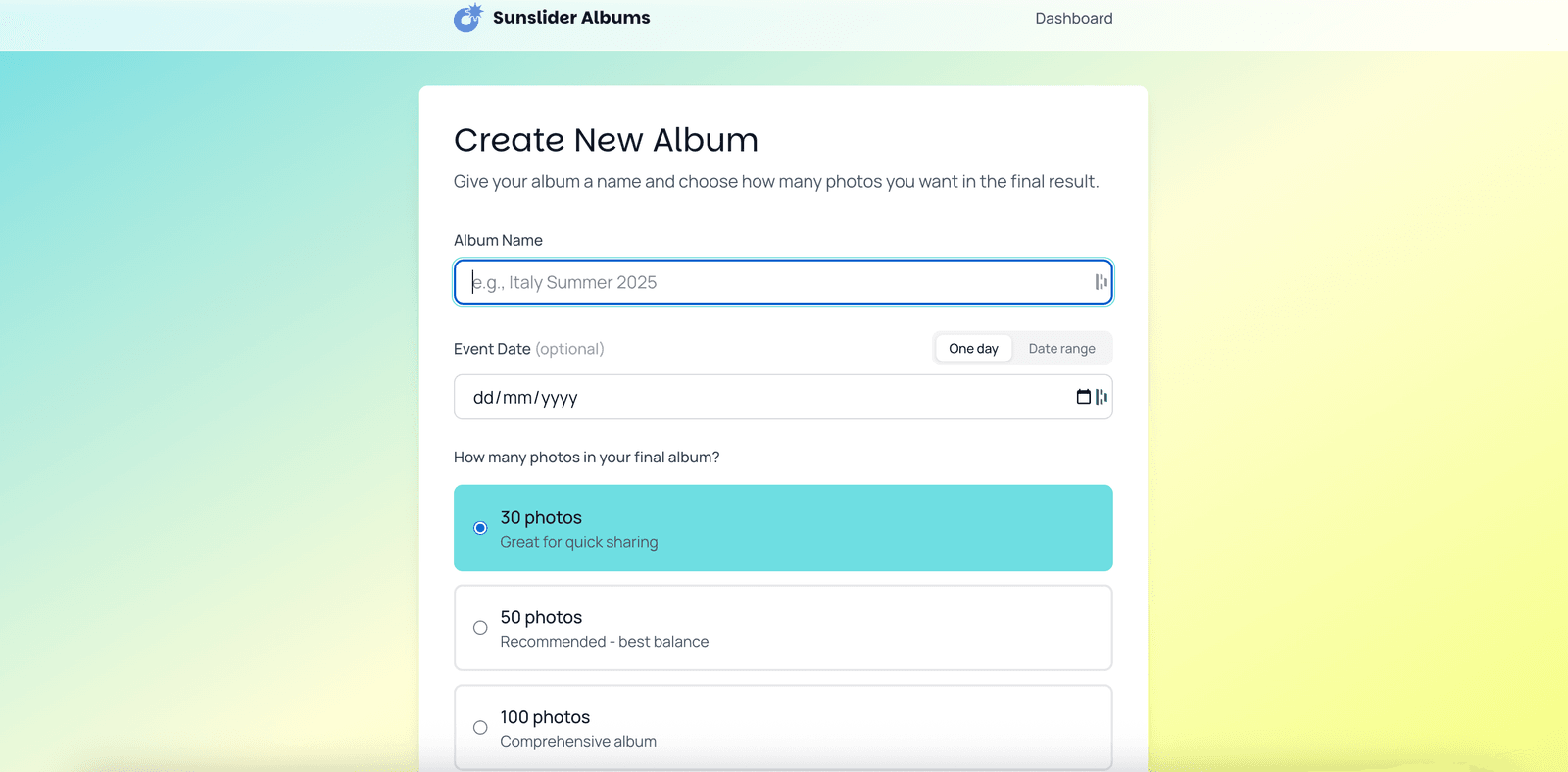
You upload your photos — up to 200 at a time on the free plan, up to 400 on premium. Then you hit a button, and the AI does the curation for you: it identifies duplicates, removes the blurry ones, picks the best shots from each part of the event, and gives you a selection of your best 30, 50, or 100 photos depending on what you asked for.
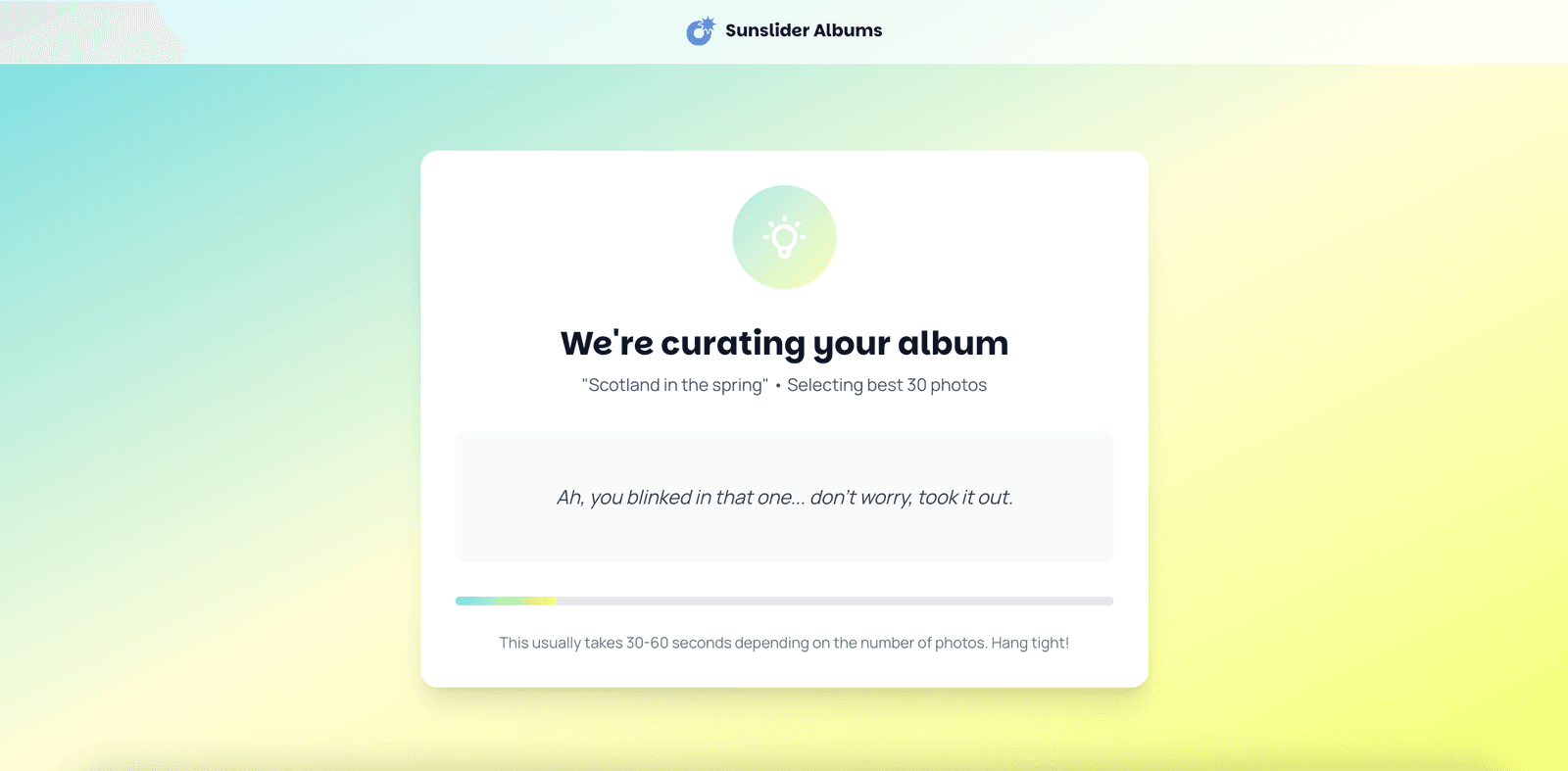
Sixty seconds later, you have an album.
You can look through the selection, swap out any photos you want, add captions if you feel like it. Then you publish it and send the link to whoever you want — family, friends, the whole group chat. They click the link, the album opens in their browser. No app to download. No account to create. Just the photos, looking good, in a format people can actually sit with.
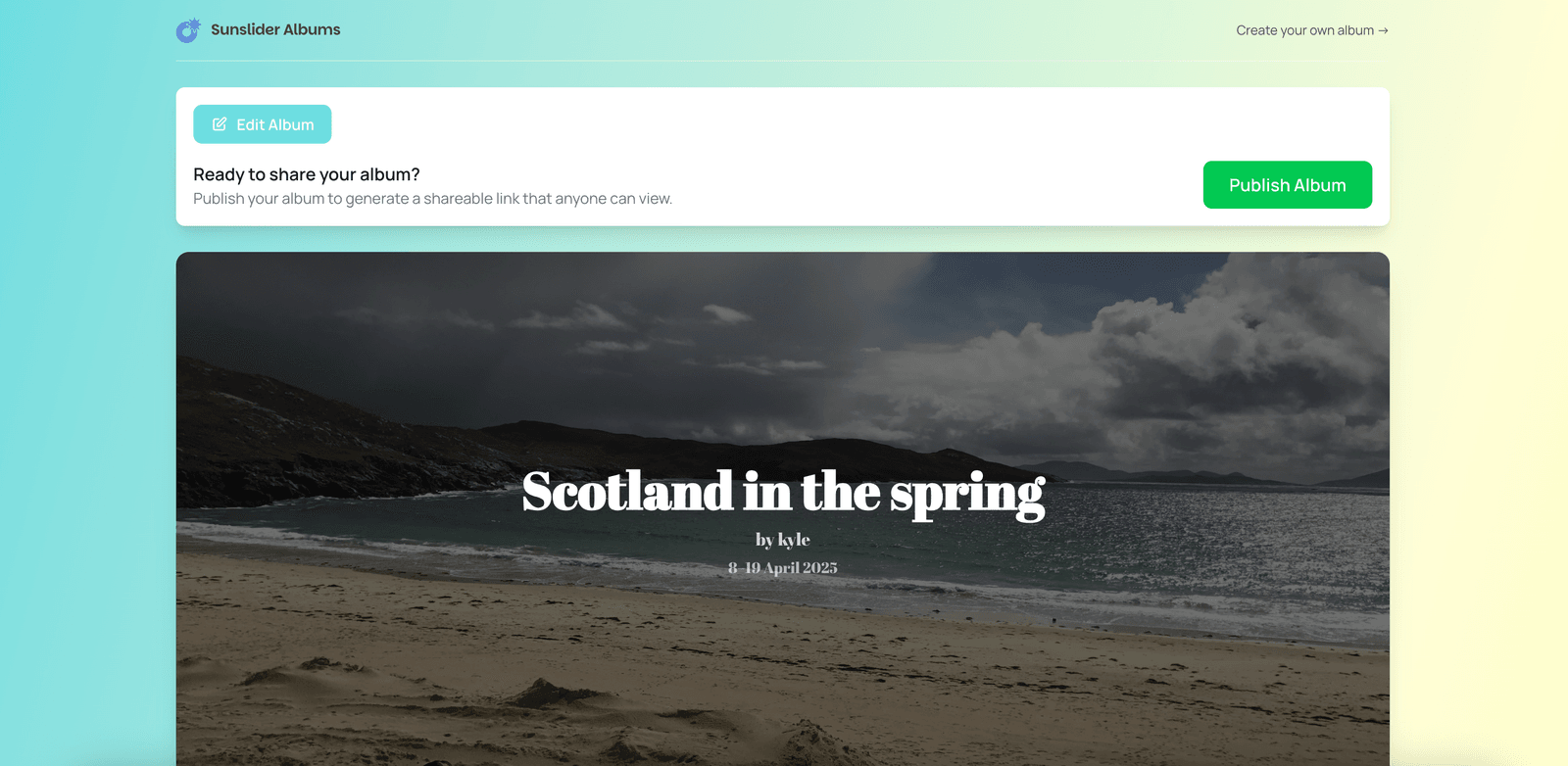
And your album is now in your account, easily located whenever you want to look back over those memories.
It's not magic. It's just removing the friction that was stopping you from doing something you actually wanted to do anyway.
Who is this for?
Honestly, anyone with a camera roll that's gotten out of control. But the people who find it most useful tend to be:
People who take a lot of photos on holiday and want to share them properly with family without creating a WhatsApp nightmare of 200 individual images.
Parents who have thousands of photos of their kids that nobody ever sees because they're buried in a phone library.
Anyone who's been to a wedding, a birthday, a reunion, and thought "I should really make an album for this" — and then never did, because it felt like too much work.
Start with one free album
Every new account gets one free album — up to 200 photos uploaded, 30 selected by the AI, shareable with anyone. No credit card required.
If you've got a set of photos sitting in your camera roll that deserves better than that, it takes about five minutes to find out.
→ Create your free album at albums.sunslider.social